
How Food Affects Mood Swings
Understanding How Food Affects Mood Swings
Have you ever noticed that your mood changes after eating? It might not just be in your head. Let’s explore how the foods we eat can impact our mood, energy levels, and overall mental well-being.
The Connection Between Diet and Mood
What we eat plays a large role in how we feel. Let's look at some key reasons:
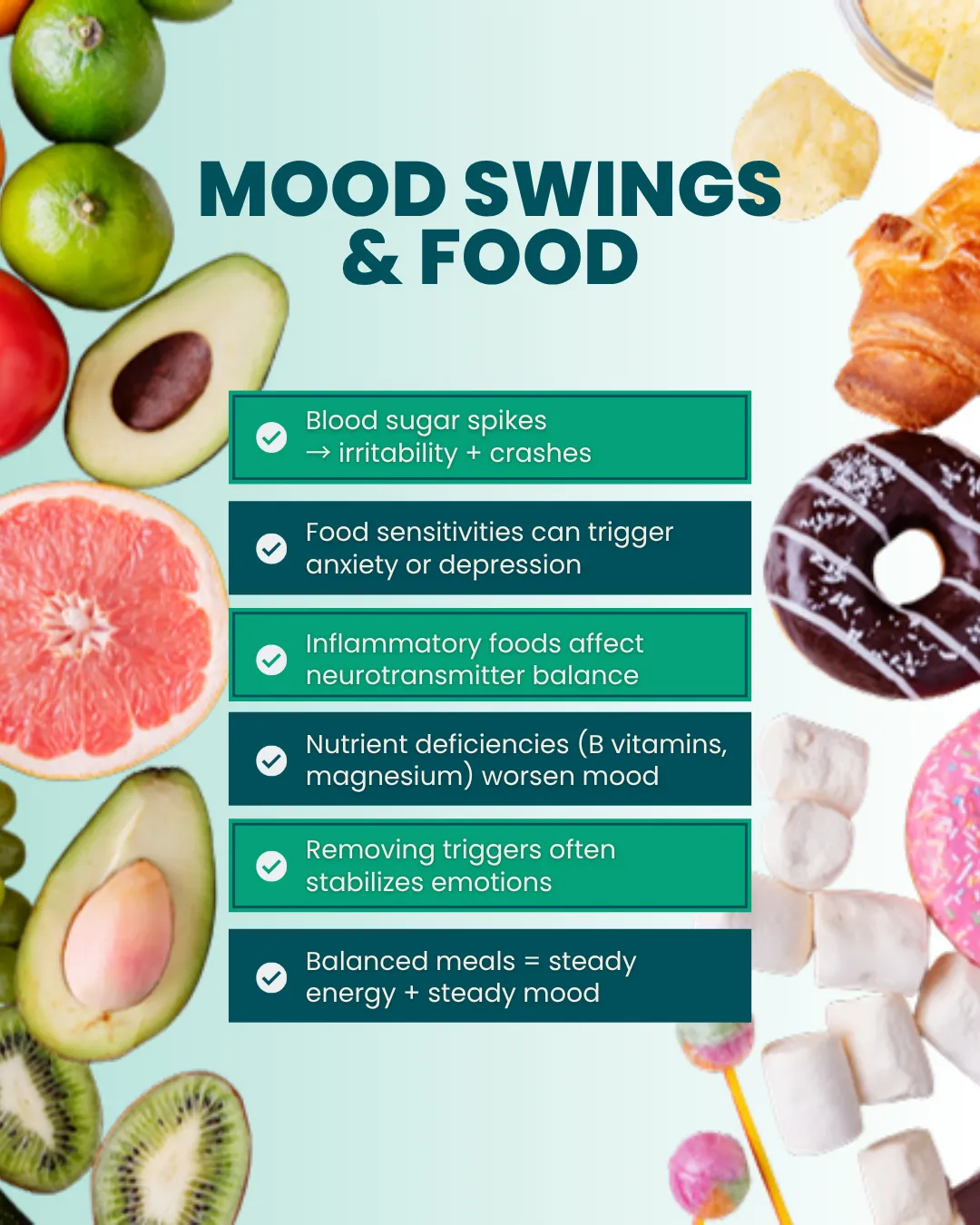
- Blood Sugar Spikes: Foods high in sugar can cause a quick spike in blood sugar, making you feel energetic at first. However, this can be followed by a sudden crash, leading to irritability or fatigue.
- Food Sensitivities: Certain foods may trigger anxiety or depression, especially in people with specific food sensitivities. Listening to your body and noticing any reactions can be helpful.
- Inflammatory Foods: Foods that cause inflammation can affect neurotransmitter balance. Neurotransmitters are chemicals in the brain that help control emotions, so it’s important to maintain their balance.
Nutrient Deficiencies and Mood
A lack of key nutrients can worsen your mood:
- B Vitamins and Magnesium: These nutrients are essential for energy production and brain health. A deficiency can lead to mood swings, fatigue, and even depression.
How to Improve Mood with Food
Making small changes to your diet can lead to big differences in how you feel:
- Eat Balanced Meals: Incorporate a variety of food groups in each meal, such as proteins, healthy fats, and complex carbohydrates. This will provide steady energy, helping stabilize mood throughout the day.
- Identify Triggers: Pay attention to how different foods make you feel. Removing foods that cause negative reactions can often help stabilize emotions.
- Include Anti-inflammatory Foods: Foods like fruits, vegetables, nuts, and fatty fish can help reduce inflammation, supporting neurotransmitter function.
Simple Meal Tips for a Better Mood
Here are some simple tips that can help maintain a steady mood:
- Start the Day Right: Eating a satisfying breakfast that includes protein and whole grains can set a positive tone for the day.
- Snack Smartly: Choose nutrient-packed snacks like nuts, fruits, and yogurt to keep energy levels consistent.
- Stay Hydrated: Drinking enough water is essential for overall health and can influence mood as well.
By understanding and listening to your body, you can use food as a way to improve your mood and energy levels. Making these small changes to what you eat can make a huge difference in how you feel each day.
