
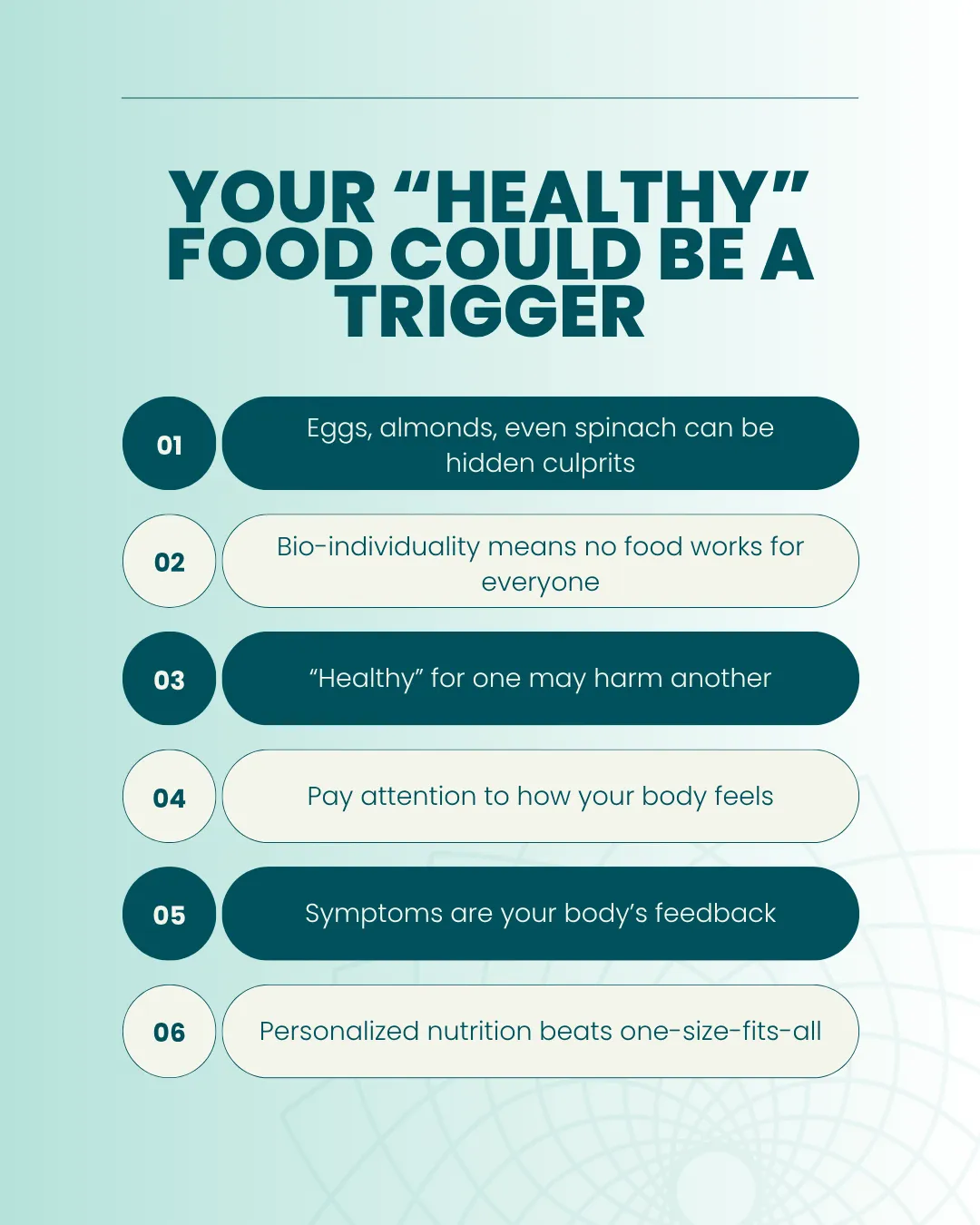
Is Your Healthy Food a Hidden Trigger?
Is Your "Healthy" Food a Hidden Trigger?
We often hear that eating healthy is the key to staying fit and well. But what if the foods labeled as "healthy" might not be the best for everyone? Understanding bio-individuality and personal nutrition can help create a diet that works specifically for you.
1. Hidden Culprits in Your Diet
Commonly praised foods like eggs, almonds, and spinach are considered superfoods. However, these foods can be hidden culprits causing discomfort or health issues for some individuals. For example, eggs may trigger allergies, almonds can cause digestive problems, and spinach might contribute to kidney stones in some people.
- Eggs: Though rich in protein, they can cause allergic reactions and sensitivities.
- Almonds: Known for their healthy fats, almonds may lead to digestive issues in some.
- Spinach: Full of iron and vitamins, yet can cause kidney issues in predisposed individuals.
2. The Concept of Bio-individuality
Bio-individuality means that each person has unique nutritional needs. No single diet works for everyone. Just because a food is healthy doesn't mean it's healthy for you. Listening to your body's reactions can guide you in choosing the right foods.
3. One Person’s Healthy Might Be Another’s Harm
What's beneficial for one person might not be for another. The key is to understand that health is personal. Foods that energize one person might cause lethargy in another. Observing how your body reacts to different foods can provide clues.
4. Listen to Your Body
Your body is constantly sending you signals. Paying attention to how you feel after eating can help identify foods that might not agree with you. Symptoms like bloating, fatigue, or headaches may indicate that certain foods aren't right for you.
- Bloating: A sign that your digestive system is struggling with certain foods.
- Fatigue: Some foods can zap your energy.
- Headaches: Could be related to food sensitivities or allergies.
5. Symptoms as Feedback
Rather than ignoring symptoms, view them as feedback from your body. Keeping a food journal can help track what you eat and the symptoms that follow. This way, you can make informed decisions about your diet.
6. Personalized Nutrition Over One-Size-Fits-All
Personalized nutrition means creating a diet that caters to your unique needs. Consulting a nutritionist or dietitian can help develop a personalized plan that considers your health goals, lifestyle, and body’s reactions.
Following a one-size-fits-all approach might not yield the desired results. Embracing personalized nutrition can lead to improved wellness and energy.
Conclusion
Understanding that "healthy" is different for everyone is crucial. Explore the idea of personalized nutrition and discover the foods that truly benefit your body. By listening to your body’s signals and paying attention to its needs, you can create a diet tailored just for you, leading to better health and happiness.
